Pasto
Andean culture near the Ecuador border, home to the UNESCO Carnaval de Negros y Blancos
Overview
Pasto is as far south as you can go in Colombia without crossing into Ecuador. Capital of the Narino department, it sits in a high Andean valley at 2,527 meters with the active Galeras volcano looming directly overhead. Population is about 400,000 in the city proper (DANE 2018: 392,930; metro area higher), but it feels like a smaller town — quiet streets, minimal traffic, and a pace of life that runs on Andean time.
This is not a city that appears on most expat radars, and that's precisely why some people love it. Pasto offers the most authentic, untouched Colombian Andean experience you can find. The culture here is distinct from the rest of Colombia — more connected to indigenous and Ecuadorian highland traditions, with its own cuisine (cuy, empanadas de pipian, helados de paila), music, and the spectacular Carnaval de Negros y Blancos every January.
The cost of living is among the lowest of any Colombian city. But the trade-offs are real: it's cold (14C average), remote, has virtually no expat community, and international connections are limited. Pasto rewards those who come with open eyes, decent Spanish, and a genuine interest in Andean culture.
Neighborhoods and Barrios
Centro (Estrato 3-4)
The historic core around Plaza de Narino and the Cathedral. Walkable, compact, and where most of the city's commercial life happens. Banks, restaurants, the main market, and government offices are all here. Rent for a furnished 1BR apartment: 400,000-700,000 COP/month ($111-194 USD). Older buildings, some with charm, some with maintenance issues. The best option if you want to be in the middle of everything without needing transport.
Santiago (Estrato 4-5)
The most residential and upscale neighborhood in Pasto, south of the center. Quieter streets, newer construction, some gated apartment complexes. This is where the city's professional class lives. A 1BR furnished apartment costs 600,000-1,000,000 COP/month ($167-278 USD). It's a 10-minute taxi ride to the Centro. If you want comfort and space, Santiago is the best bet.
Avenida Boyaca Area (Estrato 3-4)
The main commercial avenue running through the city. Banks, supermarkets (Alkosto, Exito), shopping centers, and chain restaurants line this strip. Living along Avenida Boyaca gives you convenience — everything is walking distance. Rent is comparable to Centro: 400,000-750,000 COP/month ($111-208 USD) for a 1BR. The trade-off is traffic noise on the main road.
Aurora (Estrato 4)
A newer residential development area northeast of the center. Modern apartment buildings, some with basic amenities like parking and laundry areas. This is where Pasto is growing — the buildings are newer and better maintained than Centro, but the neighborhood has less character. A 1BR: 500,000-850,000 COP/month ($139-236 USD).
Obrero (Estrato 3)
A working-class residential area west of the center. Basic but functional apartments, local tiendas, and affordable daily life. Rent can be as low as 300,000-500,000 COP/month ($83-139 USD) for a simple 1BR. Safe for daily life but more basic in terms of construction quality and amenities. Good for extreme budget living.
- 01
Carnaval de Negros y Blancos
UNESCO-recognized carnival held January 2-7 every year. On January 5 (Dia de los Negros), everyone paints each other with black cosmetic grease. On January 6 (Dia de los Blancos), the city turns white with talcum powder. January 6 also features enormous artistic floats (carrozas) made over months by master artisans. This is Pasto's crown jewel — plan your trip around it.
- 02
Las Lajas Sanctuary
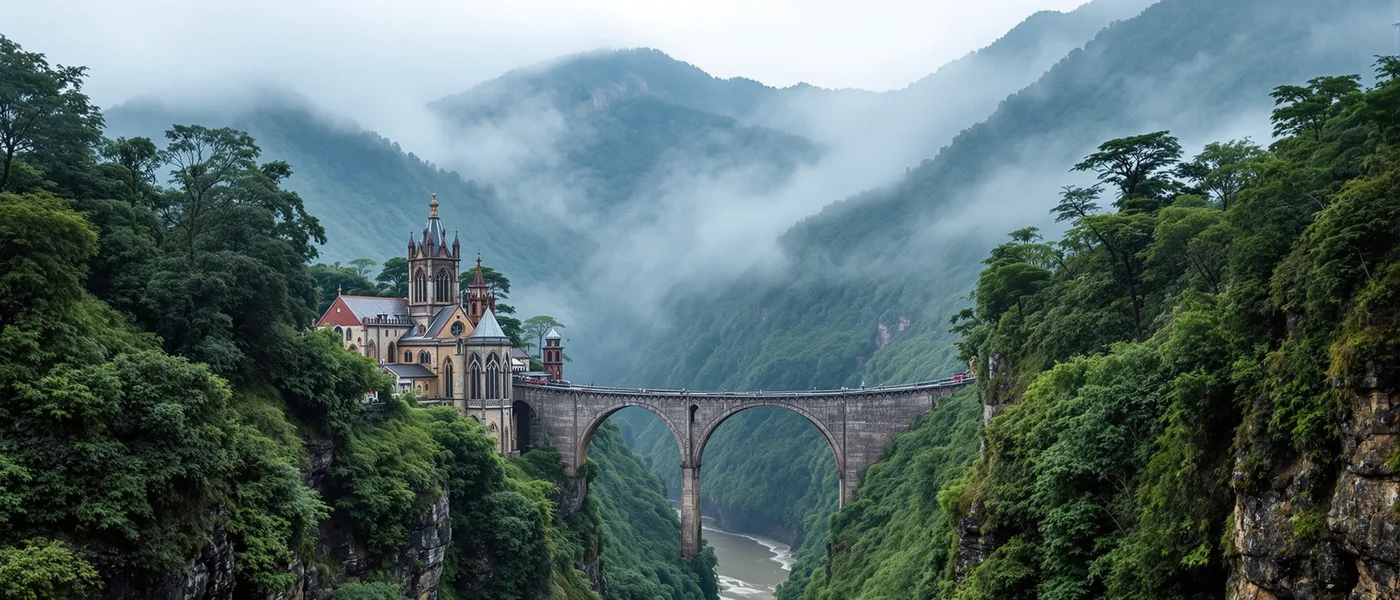
A Gothic Revival basilica built into a canyon over the Guaitara River near Ipiales, 90 minutes south of Pasto. One of the most visually stunning churches in the world. Free entry. The bridge-basilica spanning the 100m gorge is an engineering and architectural marvel. Go on a clear morning for the best photos. Combine with an Ipiales border market visit.
- 03
Laguna de la Cocha
Colombia's second-largest lake, 27 km east of Pasto at 2,760m elevation. Cold, misty, and surrounded by cloud forest. Take a boat to Isla de la Corota, a tiny island nature reserve with ancient trees. Trout restaurants line the lakeshore — a whole fried trout costs about 18,000 COP (~$5 USD). Bring a warm jacket.
- 04
Galeras Volcano
An active stratovolcano (4,276m) looming directly over Pasto. You can hike to the lower slopes for views, but the summit has been closed since the 2010 eruptive period (with smaller activity continuing through 2014). The volcano is constantly monitored by SGC — don't attempt unauthorized summit hikes. The surrounding paramo landscape is beautiful, with frailejones and mountain wildflowers.
- 05
Ipiales Border Market
The Ecuador border crossing at Ipiales (90 min from Pasto) has a massive commercial zone where Colombians and Ecuadorians trade goods. Cheap electronics, clothing, and household items. The experience is chaotic, loud, and fascinating. If you have a valid visa, crossing to Tulcan (Ecuador) for lunch is straightforward — bring your passport.
- 06
Centro Historico Walk
Pasto's compact colonial center has the Cathedral, Iglesia de San Juan Bautista, and Plaza de Narino. The architecture is modest compared to Cartagena or Bogota, but authentically Andean. The real charm is the pace — old men playing chess in the plaza, street vendors selling empanadas de pipian (a local specialty), and zero tourist crowds.
- 07
La Catedral de Pasto
The main cathedral on Plaza de Narino, built in neo-Gothic style with stone towers and stained glass. The interior is surprisingly ornate for a city this size. Free entry. Visit during Sunday mass to see the cathedral full and hear the organ. The plaza outside comes alive on Sunday mornings.
- 08
Laguna Verde
A volcanic crater lake with striking green water, located in the Azufral volcano about 3 hours northwest of Pasto. The hike to the crater rim takes about 2 hours from the trailhead. At 4,070m, it's cold and often cloudy — go early morning for the best chance of clear views. A guided day trip from Pasto costs about 100,000-150,000 COP ($28-42 USD).
- 09
Quilacinga Archaeological Sites
The Narino department was home to the Quilacinga and Pasto indigenous peoples. Small archaeological sites and museums around the city preserve their pottery, goldwork, and stone carvings. The Museo del Oro Narino (Gold Museum) in the city center has a small but interesting collection. Free entry.
- 10
Cuy — Local Guinea Pig Cuisine
Pasto is the cuy (guinea pig) capital of Colombia. Roasted whole over wood fire, cuy is the traditional celebratory dish of the Andean south. It tastes like crispy, gamey dark chicken. Restaurants along the road to Laguna de la Cocha specialize in it. A whole cuy costs about 35,000-50,000 COP ($10-14 USD). Try it once — it's a genuine cultural experience.
Cost of Living
Pasto is one of the cheapest cities in Colombia, period. It's about 40-50% cheaper than Medellin and 25-35% cheaper than the Eje Cafetero cities. The biggest savings are on rent, food, and transportation. Healthcare and internet are priced similarly nationwide. A single person can live well on $500-600 USD/month. A couple can be very comfortable on $800-1,000 USD/month.
Monthly Costs — Pasto (USD)
| Expense | Budget | Mid-Range | Comfortable |
|---|---|---|---|
| Rent (1BR apartment) | $100 | $200 | $350 |
| Rent (2BR apartment) | $150 | $300 | $500 |
| Utilities (electric, water, gas) | $20 | $35 | $55 |
| Internet (fiber) | $12 | $18 | $25 |
| Groceries | $80 | $120 | $180 |
| Dining out (per meal) | $1.50 | $3.50 | $8 |
| Transportation (monthly) | $10 | $20 | $40 |
| Health insurance (EPS) | $0 | $40 | $100 |
| Heating (gas/electric) | $5 | $10 | $20 |
| Total (single person) | $300 | $530 | $950 |
Pros and Cons
Pros
- Unique Andean culture. Pasto's culture is distinct from the rest of Colombia. The food, music, festivals, and daily rhythms are connected to highland indigenous traditions you won't find in Medellin or Bogota.
- Carnaval de Negros y Blancos. One of the most spectacular festivals in South America. If you're here in January, it will be the highlight of your year. The artisan floats (carrozas) are works of art.
- Extremely affordable. Among the cheapest cities in Colombia. Your budget goes further here than almost anywhere.
- Authentic and untouristed. No tourist infrastructure, no gringo prices, no staged experiences. You'll see Colombia as Colombians live it.
- Las Lajas Sanctuary nearby. One of the most beautiful churches in the world is a 90-minute drive away.
- Ecuador border access. Ipiales is 90 minutes south. You can cross to Ecuador for day trips, border shopping, or onward travel to Quito.
- Galeras and Laguna de la Cocha. Dramatic volcanic landscape and a misty highland lake — both within 30 minutes.
Cons
- Remote. Pasto is far from other major Colombian cities. Bogota is a 1.5-hour flight or a 20-hour bus ride. Cali is 8 hours by bus. You'll feel the distance.
- Cold. 14C average with nights dropping to 5-8C. No central heating in most buildings. If you dislike cold weather, Pasto will be uncomfortable.
- Very few expats. The foreign population is nearly zero. There are no expat groups, English-language services, or international community events. You are on your own.
- Limited international connections. Antonio Narino Airport (PSO) has flights to Bogota and occasionally Cali. That's it. No international routes.
- Altitude. At 2,527m, some people experience headaches, fatigue, or shortness of breath for the first few days. Give yourself time to acclimate.
- Basic city infrastructure. Fewer restaurants, gyms, coworking spaces, and entertainment options than any other departmental capital covered on this site.
- Spanish is absolutely essential. Almost nobody speaks English. Even intermediate Spanish may not be enough — Pastuso Spanish has its own vocabulary and cadence that takes time to learn.
Practical Tips
Getting There
Antonio Narino Airport (PSO) is about 35 km north of the city (45 minutes by car due to mountain roads). Avianca and LATAM fly to Bogota daily (1.5 hours, $50-100 USD one-way). A taxi from the airport to the city center costs about 30,000-40,000 COP ($8-11 USD). Alternatively, intercity buses connect Pasto to Cali (8 hours, ~80,000 COP / $22 USD), Popayan (5 hours), and Ipiales (2 hours, ~15,000 COP / $4 USD).
Getting Around
Pasto is compact enough to walk for most daily needs if you're in the Centro or along Avenida Boyaca. City buses cost 2,000 COP (~$0.56 USD). Taxis are abundant and cheap — most trips within the city cost 4,000-8,000 COP ($1.10-2.20 USD). Ride-hailing apps are limited; InDriver works sometimes, but street taxis are the norm. Always confirm the price before getting in.
Finding an Apartment
Online listings on FincaRaiz.com.co are sparse for Pasto. Your best bet is walking the neighborhoods and looking for "Se Arrienda" signs, asking at local real estate offices, or posting in Facebook groups like "Arriendos Pasto Narino." Most landlords are traditional — they want to meet you in person, see your cedula or passport, and may ask for a co-signer (fiador). Furnished apartments are rare; expect to buy basic furniture or negotiate with the landlord to include some.
Healthcare
Hospital Universitario Departamental de Narino and Hospital San Pedro are the main facilities. For routine care, they're adequate. For specialized procedures or emergencies, most people travel to Cali or Bogota. A private doctor visit costs 40,000-80,000 COP ($11-22 USD). Pharmacies (Drogueria la Rebaja, Cruz Verde) are common in the Centro.
Internet and Remote Work
Fiber internet from Claro and Movistar is available in Santiago and parts of the Centro, with speeds up to 100 Mbps for 50,000-70,000 COP/month ($14-19 USD). Coverage in outer neighborhoods can be 4G-only. There are no formal coworking spaces in Pasto. Cafes near the university area have WiFi, but speeds vary. If remote work reliability is critical, verify internet in your specific apartment before committing.
Visa and Border Notes
Standard Colombian visa rules apply. The proximity to Ecuador is useful: you can exit and re-enter Colombia at the Ipiales/Tulcan border to reset your tourist visa clock (90 days). The border crossing is straightforward — get your exit stamp at Migracion Colombia in Ipiales, walk across the Rumichaca bridge, and get your Ecuador entry stamp. Then reverse the process to re-enter Colombia with a fresh 90 days. Bring your passport and a pen.
Festivals and Events
Carnaval de Negros y Blancos
UNESCO-recognized carnival dating back to colonial times. Participants paint each other black and white in celebration of diversity.