Corralejas de Tolú: Inside Colombia's Wildest, and Possibly Last, Bull Festival
Most travel articles about the Caribbean coast of Sucre will point you at the beaches: the warm flat water of the Golfo de Morrosquillo, the day boats out to Isla Múcura and the San Bernardo islands, the sunset strip in Tolú where everyone rents a four-person bici-taxi with a sound system bolted to the back. All of that is real and all of it is worth your time.
This is about the other thing that happens in Tolú in July. The corralejas.
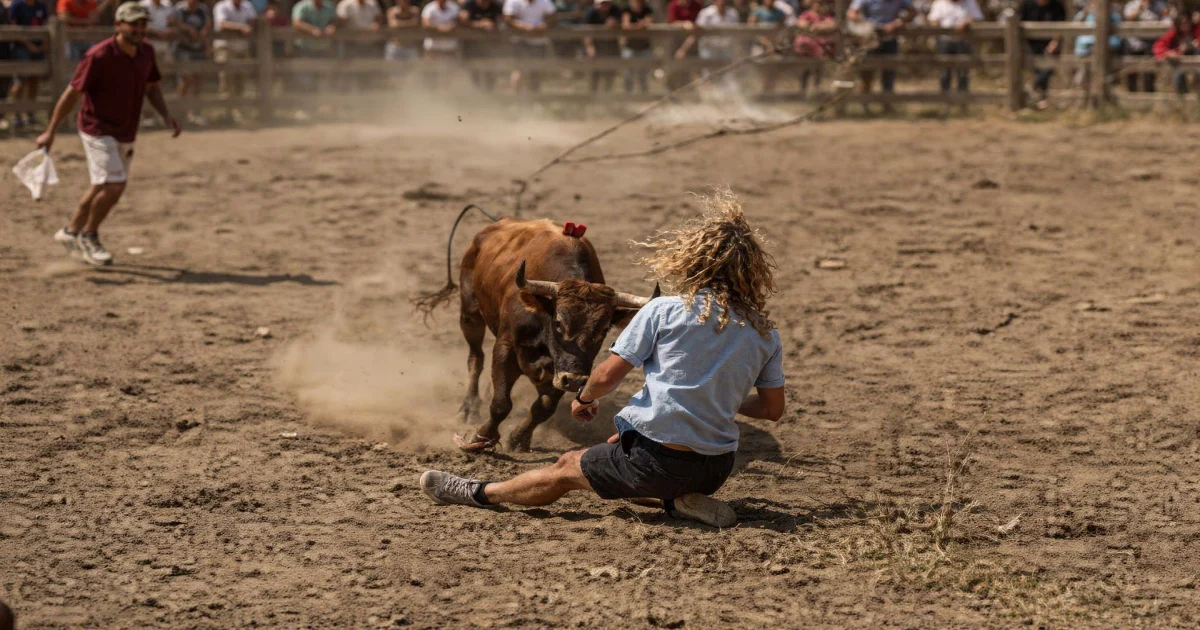
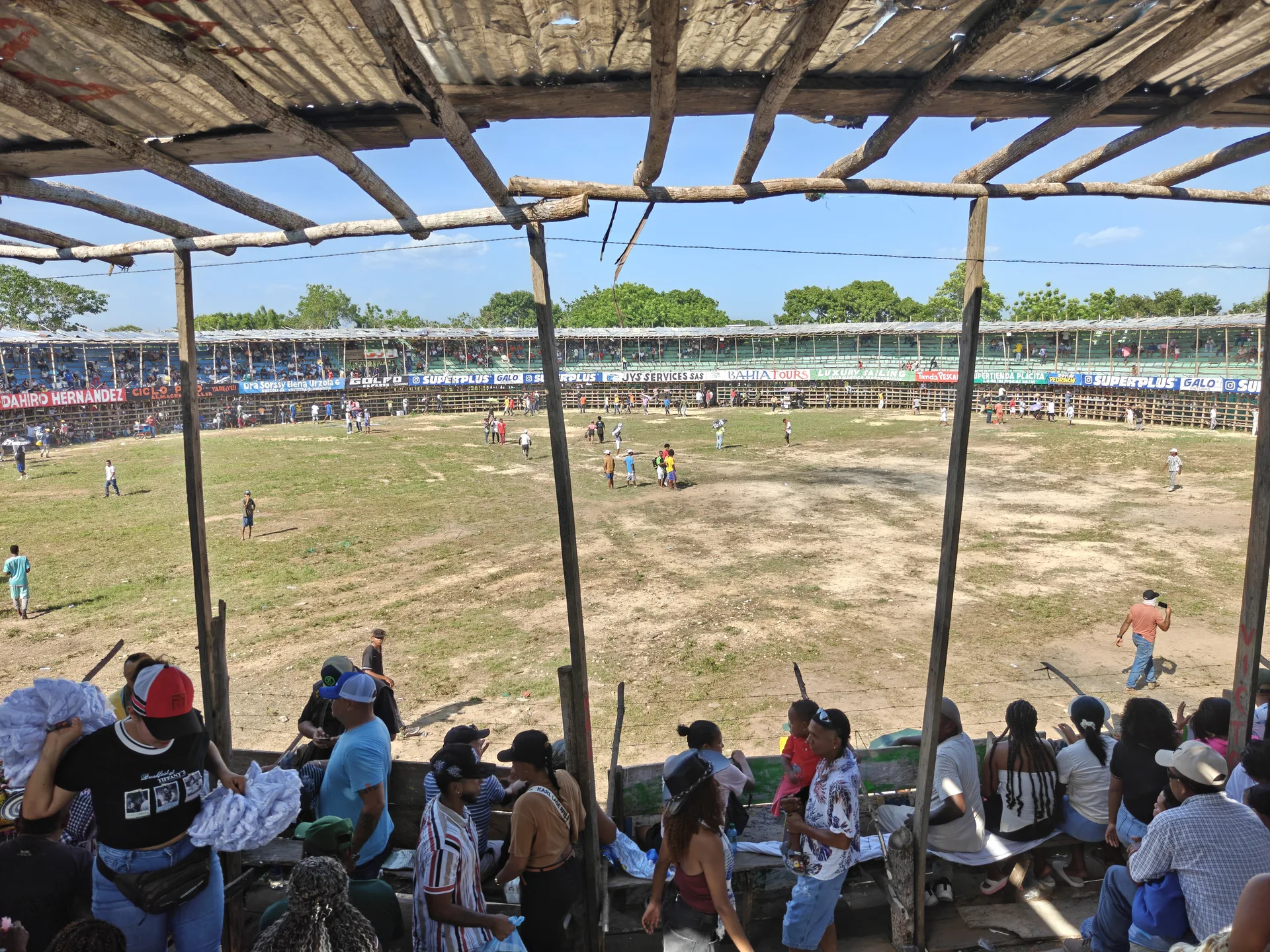
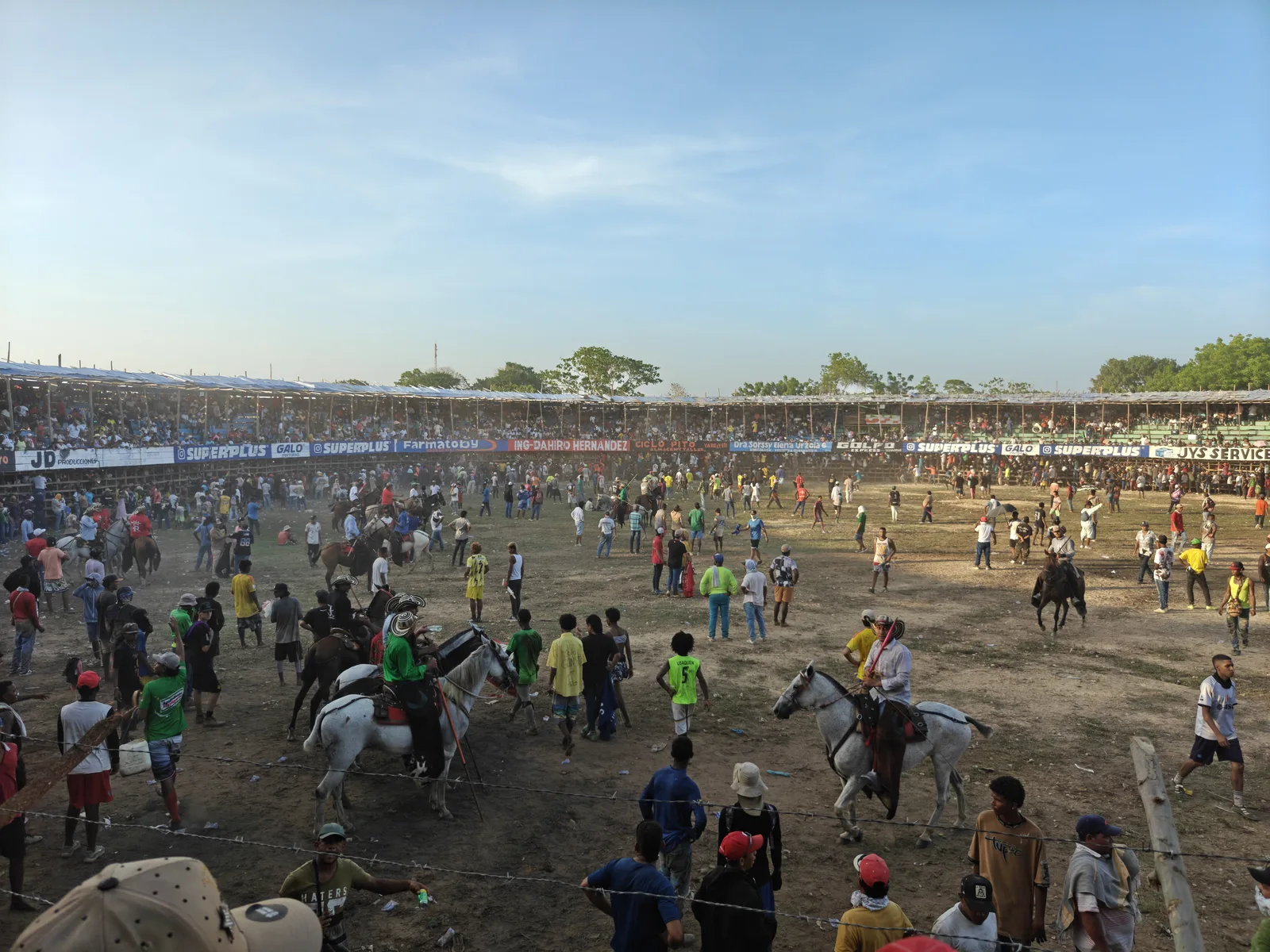
A corraleja is not a Spanish bullfight. Nobody in a gold suit performs a slow ritual and nobody kills the bull in the ring. A corraleja is a wooden stadium thrown up out of poles and planks, a few thousand people packed into the palcos with rum and beer and a papayera brass band, and a bull turned loose into a crowd of amateurs who chose to be down there. Some of them have capes. Most of them have nothing but bad judgment and a head start. The bull is the only professional in the building.
It is loud, it is genuinely dangerous, and after 2027 it will most likely be illegal. If you want to understand the Colombian Caribbean, you should understand the corralejas before they are gone. You do not have to go down into the dirt to do that.
What a corraleja actually is
The tradition comes out of the cattle country of the Sabanas, the savanna that spreads across Sucre and Córdoba. The big one, the oldest and most famous, runs in Sincelejo every January around the festival of the Dulce Nombre de Jesús. Tolú holds its own during the town’s mid-July patron-saint season, the Fiestas de Santiago el Mayor, the stretch around Colombian independence on July 20 when the whole Golfo de Morrosquillo fills up anyway.
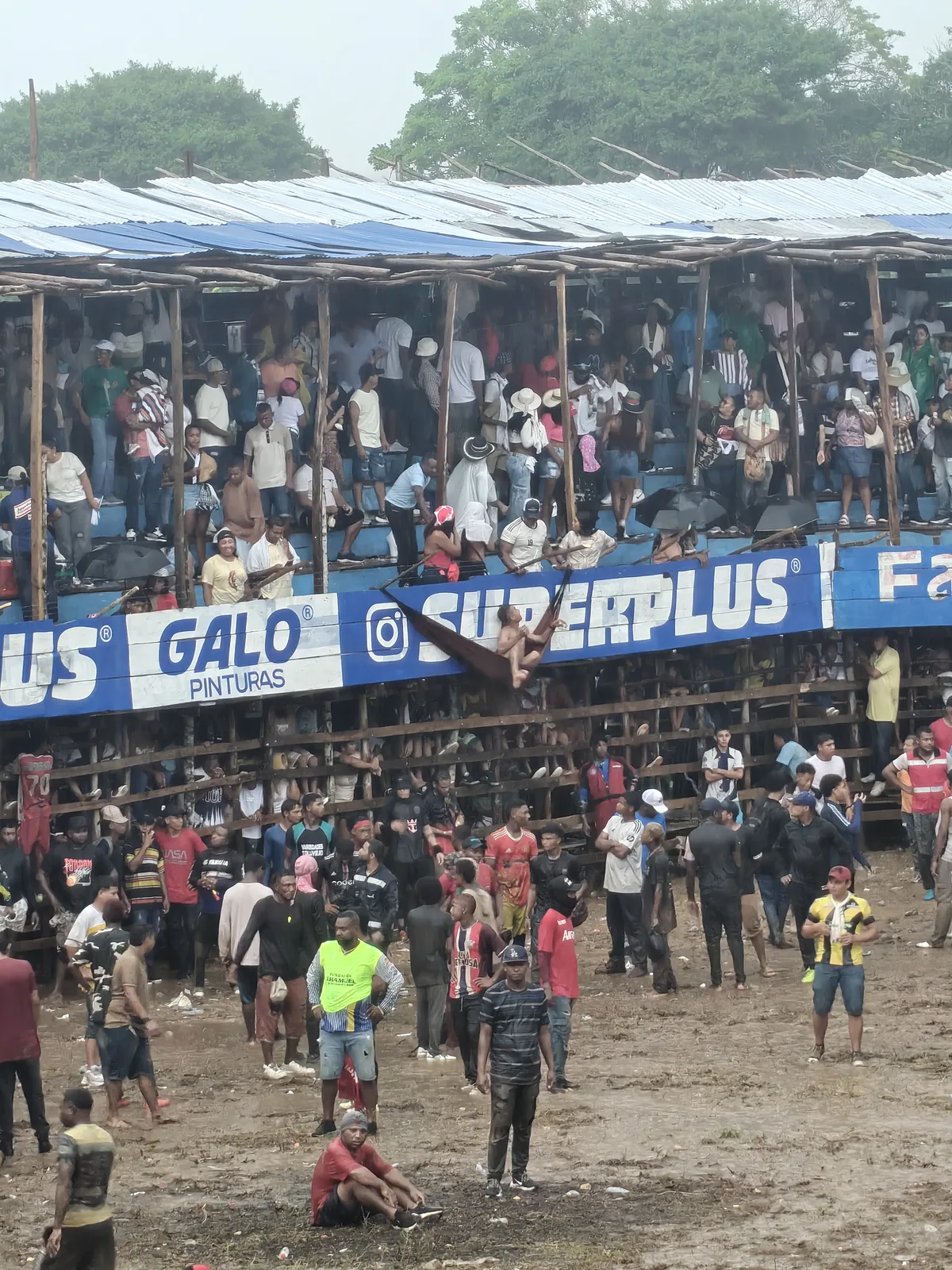
Here is the shape of it. A ring, the plaza de corralejas, is built fresh each year from timber and lashed-together scaffolding. Tiered stands, the palcos, climb up around it, the cheap sun side and the shaded paid side, the same social split you find in every Colombian crowd. Down in the dirt are the manteros and garrocheros, the amateurs who face the bull with a cloth or a pole, and a loose cast of drunk young men who are there to prove something. The bull is run, taunted, and sometimes ridden, then taken out and a fresh one comes in. Above it all a brass band plays fandango and the crowd dances in the stands while people are being chased below. That contrast, a party in the palcos and real danger in the dirt, is the whole event.
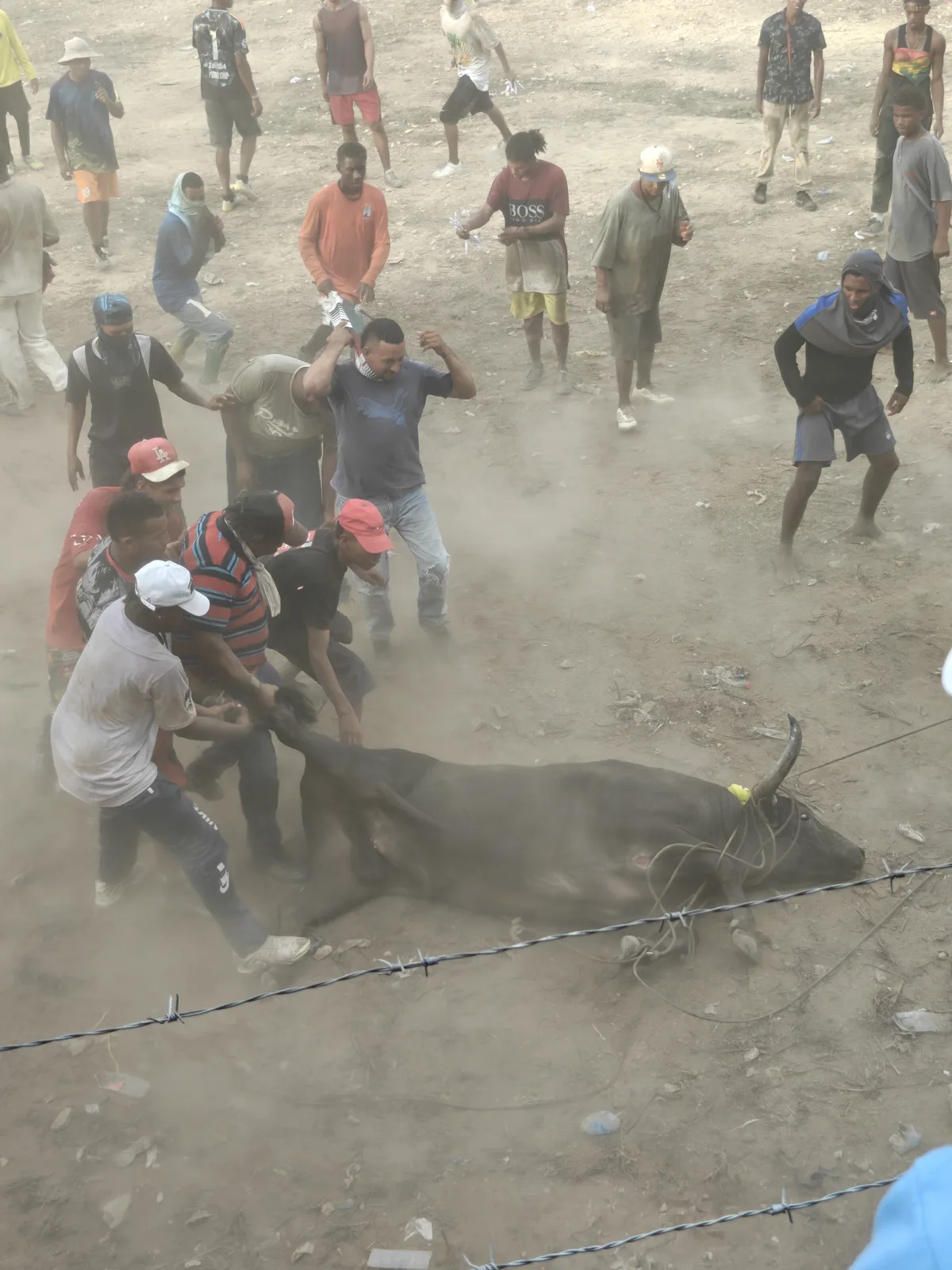
One thing to be clear about, because visitors always ask: the bull is not killed in the ring the way it is in a Spanish corrida. The animals are taunted, jabbed with banderillas, exhausted and frightened, and the welfare objections to that are serious and we will get to them. But the spectacle is the chaos of the crowd against the animal, not a staged execution.
The gringo who runs in them
The clearest window I have into the corralejas is my cousin Jay.
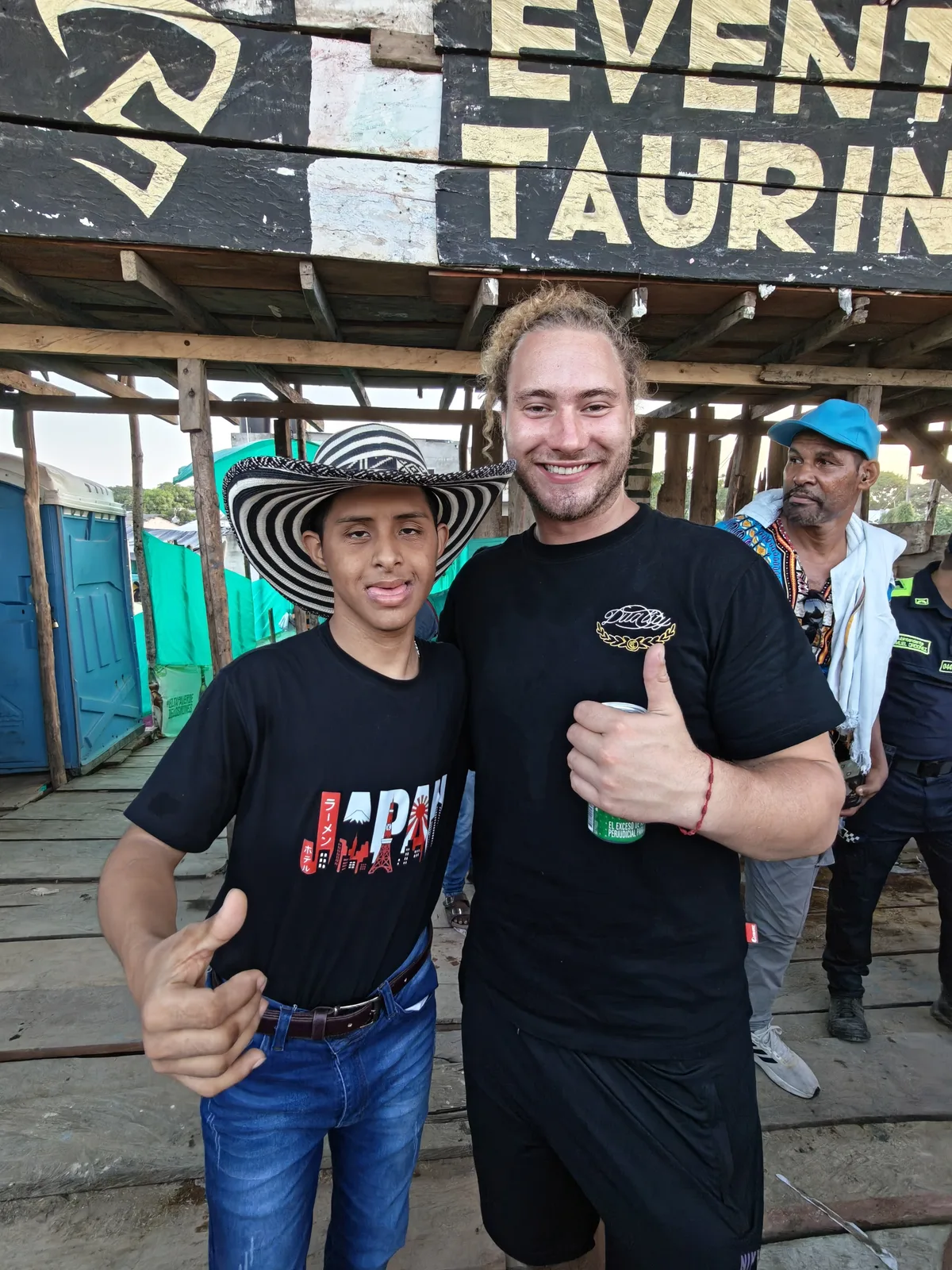
Jay McAvoy grew up near Boston and waits tables for a living. The first time he came to Colombia he landed in Bogotá, decided the city was cold and the food had no flavor, and told himself he was never coming back. Then he traveled to the coast, and something switched. He learned Spanish with a thick costeño accent from his friends in Tolú after failing the class three times in high school. He bought a house in Tolú with his dad, in the Calle Nueva barrio, because his dad fell for the place too. Online he goes by El Gringo Costeño, also Tarzan Travels, and the regional newspaper El Meridiano did a sit-down interview with him under the headline “the gringo of the corralejas and his love for the coastal culture.”
The first corraleja, he says, his friends dragged him to without telling him what it was. He only watched. He stood up in the palcos and felt the noise and the adrenaline of the thing and decided he wanted to go down into the ring. His friends told him, in so many words, “we brought you to see the corraleja, not to die in it.” He went in anyway.
He ran about ten corralejas before a bull caught him and broke his leg, in the town of Palmito, not far from Tolú. That is the metal rod he still has in his leg. He kept going back.
I am not holding Jay up as a role model here, and neither is he. In one of his own videos, before the footage starts, he says it plainly: “I don’t condone how they treat the animals, but it is part of the culture.” That is a more honest place to stand than most of what gets written about corralejas from either side.
Up on the Wall
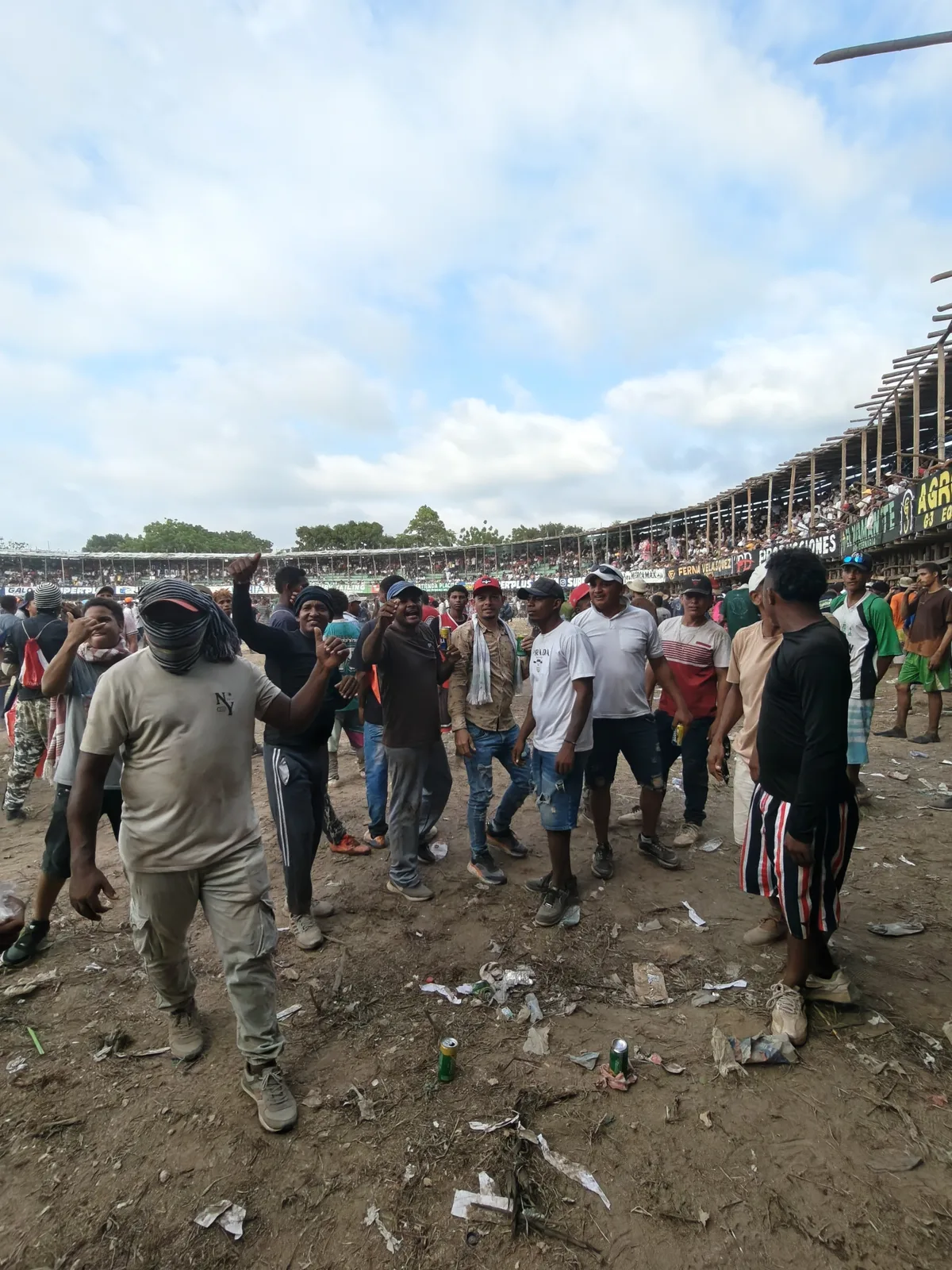
This July I went down to Tolú to see the corralejas with my cousin Jay, who has gone for years. We went in, down into the ruedo, the dirt and dust ring, among the crowd. We did not run the bull and we did not fight it. Plenty write it up as if they did. We were in there with everyone else.
The mechanic is simple: when a bull comes in, maybe ninety percent of the people climb the wooden palco walls or slide underneath them to get clear. That is the move, not running the bull, getting out of its way.
We filmed from the wall. The bull loose in the mud, the manteros with their capes, the garrocheros circling on horseback. When a bull hits the base of that timber wall you feel it in the boards under you.
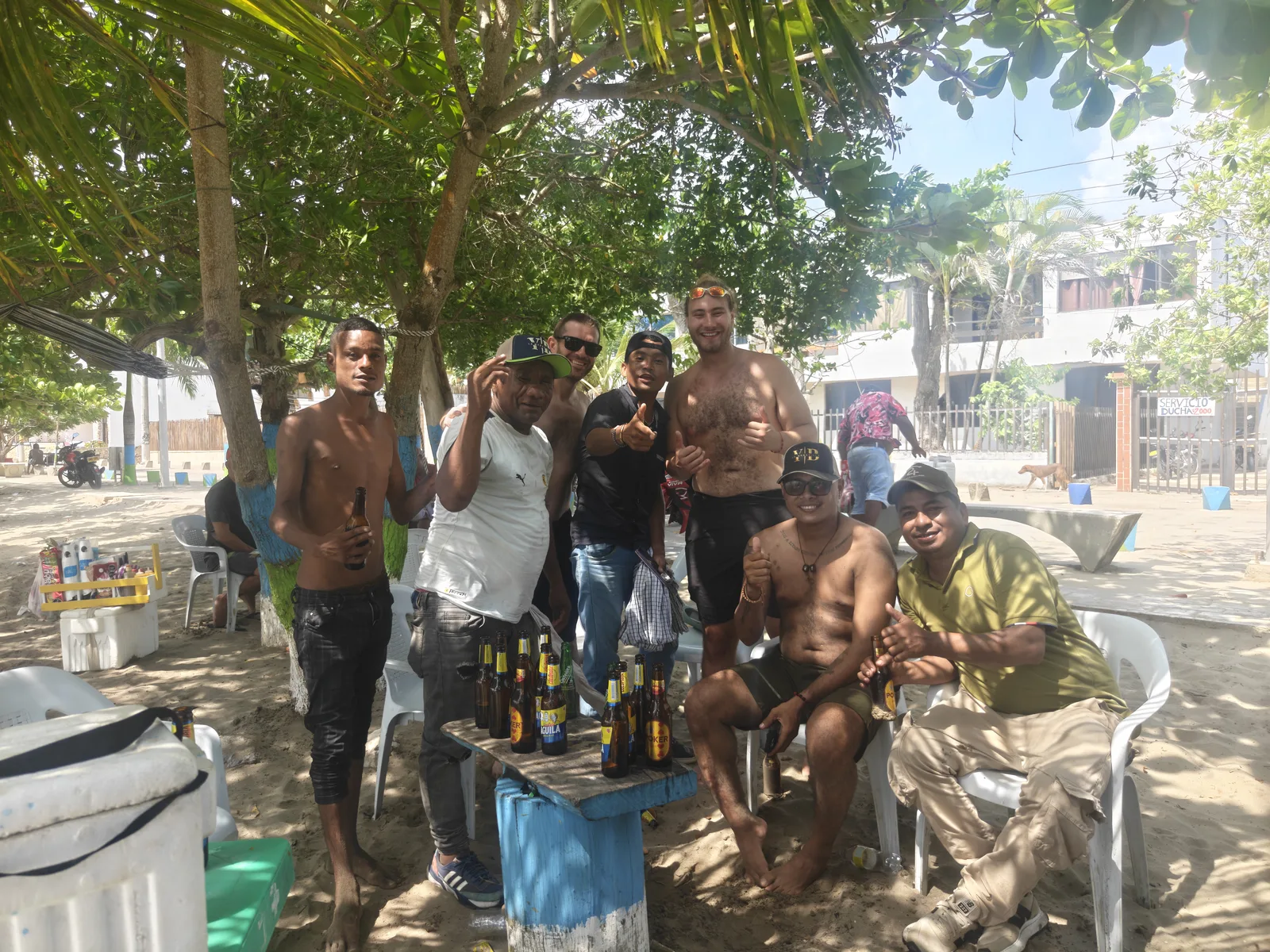
One day it poured. Hard coastal rain turned the ruedo to mud and nobody left. The music never stopped, and the papayera played through it. Ranch owners and riders we had never met handed us beers, waved us over, made room on the wall. In the mornings, before the ring, people were down at the beach, loose and easy, waiting on the afternoon.
The corralejas are dangerous, hard on the animals, and officially in their final years. I cover that in full elsewhere in this article.
I am a gringo up from Pereira, and I have rarely felt more openly welcomed anywhere in Colombia than up on that wall.
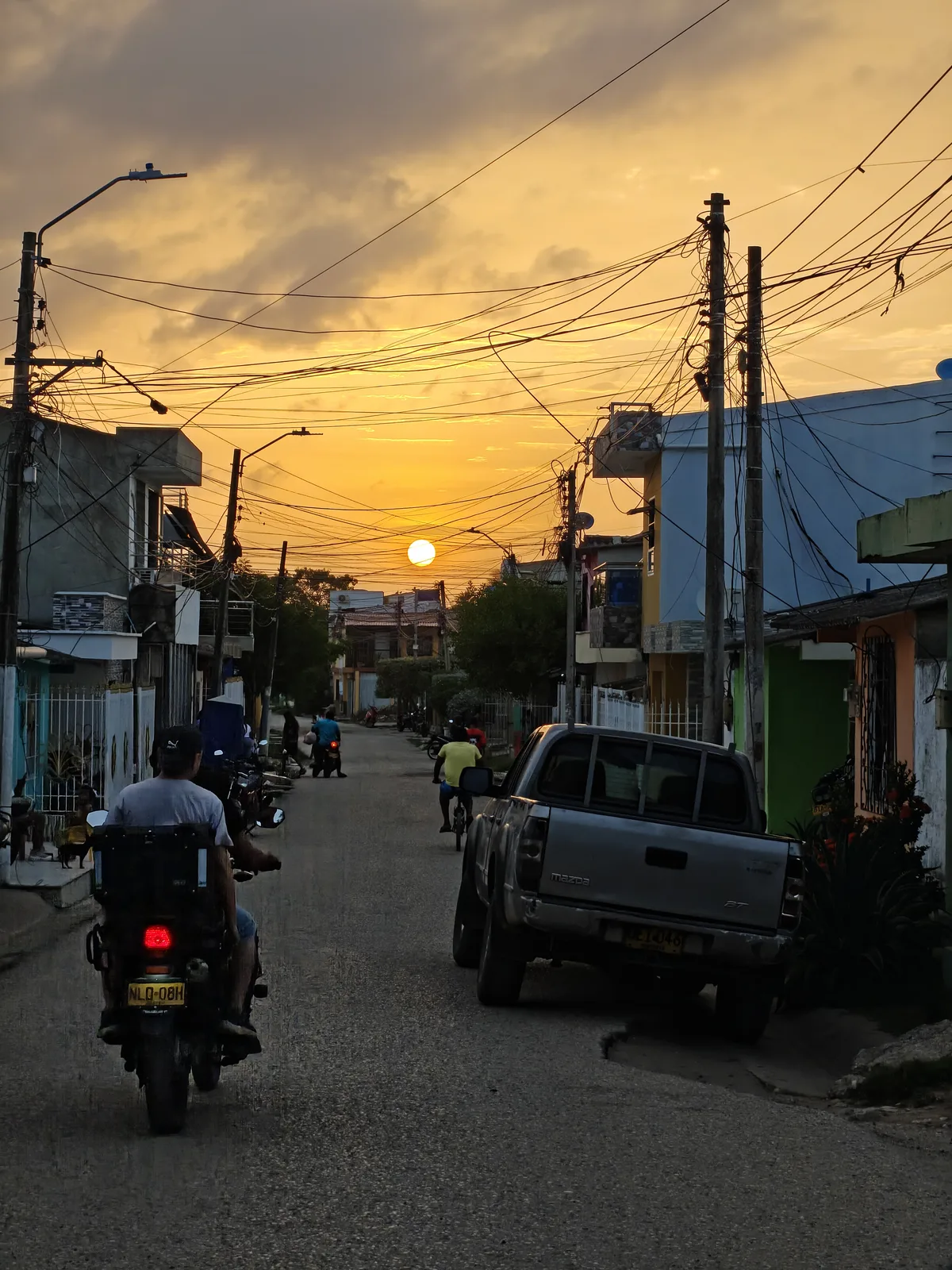
We left the corraleja at dusk, the sun going down over the Tolú beach in the distance, everyone heading back toward the water. The official line is that corralejas are banned from 2027. It did not feel like a tradition that dies on schedule, and I would not bet against Tolú finding a way to keep it going.
Why it is genuinely dangerous
People die at corralejas. Not as a rare freak event, as a recurring feature.
In one of Jay’s videos from a corraleja he points the camera at a small memorial inside the event, for a man who had been killed there the day before. The most feared bulls are the ones with a body count, and that reputation is the draw: the more dangerous the animal, the more famous it is, and Jay has stood in rings with bulls said to have ten or more deaths behind them. He describes watching a bull nearly kill a man three feet in front of him and seeing his own life flash. He describes being stuck in the dirt with nowhere to climb when a bull turned.
And the danger is not only in the ring. The deadliest day in the history of the festival had nothing to do with the bulls. On January 20, 1980, in Sincelejo, the wooden palcos collapsed. Spectators in the lower stands had pushed back under the roof to get out of heavy rain, the overloaded structure gave way, and the stands came down on the people below. The death toll has never been settled: contemporary wire reports counted from 147 to 222 dead, while Colombian retrospectives put it closer to 400 or 500, with around two thousand injured. Either way it remains the deadliest spectator disaster in Colombian history, and it happened in a structure built exactly like the ones still going up every year.
If you take one practical thing from this article, take this: the risk to a visitor is not really the bull. It is the crowd, the alcohol, the improvised construction, and the crush. Where you stand matters more than how brave you are.
Why Colombia is about to ban them
In 2024 the Colombian Congress passed Law 2385, known as the “No Más Olé” law, banning bullfighting nationwide with a three-year transition so the towns and workers who depend on it can adapt. The law originally carved out exceptions for corralejas, coleo, and cockfighting, the rural Caribbean traditions, on cultural grounds.
Those exceptions did not survive. In 2025 the Constitutional Court reviewed the law, upheld the ban, and struck the carve-outs down with it. As it stands now, corralejas are included in the prohibition, with the full phase-out landing in 2027. That means the 2026 season, the one happening in Tolú and Sincelejo this July and next January, is very likely among the last legal corralejas Colombia will ever hold.
This is a real and unresolved argument, and it deserves both sides. For animal-welfare advocates, a tradition built on terrifying and injuring bulls for a crowd was never defensible, and the law is decades overdue. For a lot of people in Sucre and Córdoba, the corraleja is the cultural and economic center of the year, the thing the whole town builds toward, and they see a Bogotá court erasing a Caribbean tradition that the rest of the country never understood. Both of those things are true at once. The law gives municipalities until 2027 and funds a transition plan to move the workers and repurpose the rings. Whether a five-century-old festival actually ends on schedule, or just goes underground, is something nobody in Tolú will tell you with a straight face.
For more on traveling the region responsibly, see our guide to whether Colombia is safe in 2026.
How to experience it as a visitor, safely
You can absolutely go, watch, and have one of the best nights of your trip without ever setting foot in the dirt. Here is how to do it without becoming a cautionary tale.
- Watch from the palcos, pay for the shaded side. The covered, paid stands are calmer, less drunk, and structurally the better bet. The free sun side is the rowdiest part of the crowd. Note that the ring is free to watch from the public areas, but running in it, going down into the dirt, is the part people pay a small fee for, around 30,000 pesos, to risk their own neck for the crowd’s entertainment.
- Do not go into the ring. This should not need saying, but every year it needs saying. You are not insured, you do not know the bulls, and the nearest trauma surgeon is not close.
- Treat it like any big Colombian crowd event. Bring small cash, leave the nice phone and the jewelry at the hotel, watch your drinks, and know where the exits are before you need them. Pickpocketing and over-drinking will affect a tourist long before a bull does.
- Go with someone local if you can. This is the kind of event that is far better, and far safer, with someone who knows which palco to sit in and when to leave. The party in the stands and the bars afterward runs until three in the morning.
Getting to Tolú
Santiago de Tolú sits on the Golfo de Morrosquillo in Sucre, on the Caribbean coast.
- From Cartagena: roughly three to four hours south by road, the most common route for travelers, with shared vans and buses running through the day.
- From Montería: about two hours, the closest major city and airport in neighboring Córdoba.
- From Medellín: a long but scenic road day, or a short flight into Montería or Corozal and a transfer from there.
Most people come for the beaches and the islands and treat the corraleja as the reason they timed the trip for July. That is the right instinct. Base yourself in Tolú or nearby Coveñas, spend your days on boats out to Isla Múcura and the San Bernardo archipelago, and save the corraleja for the evening it falls on. Exact dates for the 2026 corralejas move year to year with the patron-saint calendar, so check the Alcaldía de Santiago de Tolú for the official program closer to July rather than trusting a fixed date online.
Why this one is worth your attention
The corralejas are not comfortable. They are dangerous for the people in the ring, they are hard on the animals, and they are about to be against the law. None of that is a reason to look away from them. It is a reason to understand what they are while they still exist, on their own terms, in the place they come from, told by the people who actually go.
If you find yourself on the Sucre coast in July, sit in the shaded palcos with a cold beer, watch a brass band play while the whole town loses its mind, and pay attention. You are watching the end of something.
Jay documents the corralejas and his coastal life as El Gringo Costeño. Watch him on YouTube and on Instagram at @jay_elgringocosteno (also @tarzantravels). We are working on a fuller piece with him directly. If you have been to the corralejas and want to add to this, write us at [email protected].