Colombia's World Cup Is Over. For This Generation, It Was the Last One.
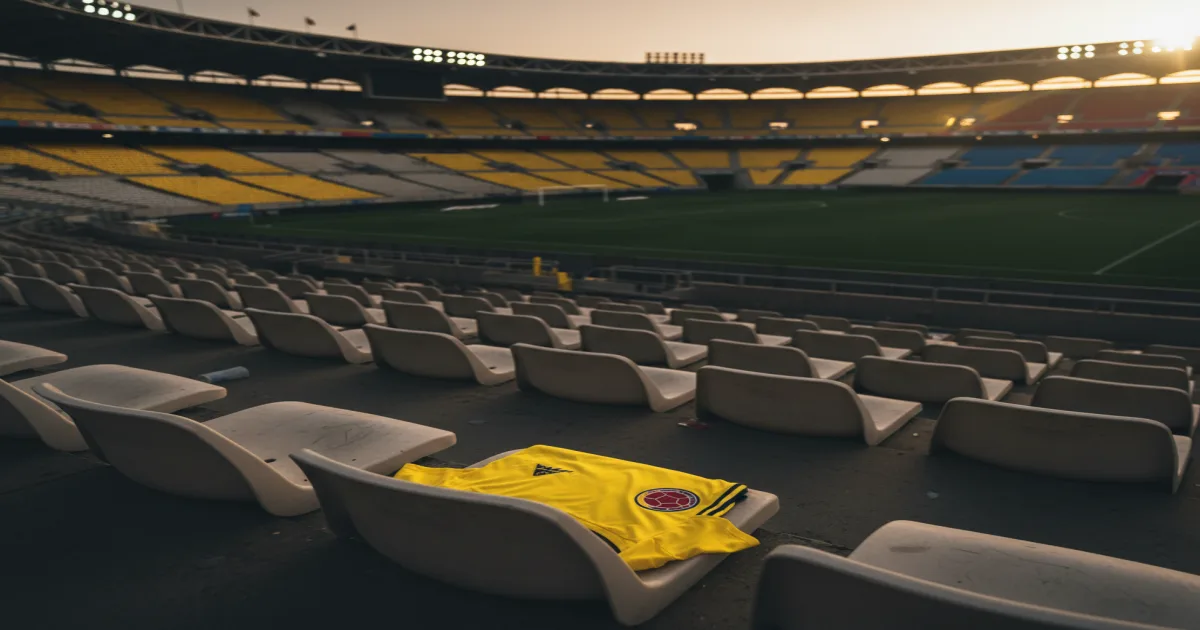
The final whistle in Vancouver confirmed what the shootout had already made brutally clear. Colombia’s 2026 World Cup ended in the round of 16, beaten 4-3 on penalties by Switzerland after 120 goalless minutes. Davinson Sánchez rattled the crossbar. Cucho Hernández saw his effort saved by Gregor Kobel. When Ruben Vargas buried the decisive kick, it sent the Swiss to their first quarterfinal since 1954 and a date with Argentina in Kansas City. For Colombia, it was a second consecutive World Cup knockout exit on penalties, a grim echo of the 2018 loss to England (they missed the 2022 tournament entirely). The ache is familiar, and this one cuts deeper. Colombia did not lose a single match in normal time all tournament. They simply ran into the cold math of penalties and a goalkeeper in form.
A run that deserved a better ending
The path to that Vancouver night deserved more. Colombia won Group K with seven points, a controlled campaign built on defensive structure and moments of individual clarity. They opened with a 3-1 win over Uzbekistan, ground out a 1-0 result against DR Congo, and closed the group with a 0-0 draw against Portugal that secured top spot. In the round of 32, a single goal was enough to dispatch Ghana. Four matches, zero defeats in 90 or 120 minutes. Néstor Lorenzo’s side was hard to break down and carried genuine threat in transition. None of that softens the blow. If anything, it sharpens the regret.
The end of a golden generation’s second act
The real weight of this exit sits with the generation that carried Colombia back to relevance. James Rodríguez, at 34, captained his third World Cup. David Ospina, at 37, was here for a fourth. Camilo Vargas, the same age, was the other veteran between the posts. These are not bit-part players clinging to a last call-up. They are the spine of a cycle that began with the electric run to the quarterfinals in 2014 and now reaches its logical, painful endpoint.
Look ahead to 2030 and the arithmetic is unforgiving. Ospina and Vargas would both be 41. Goalkeepers can age gracefully, but four more years at the international level is a massive ask, and for two of them at once it is close to fantasy. James would be 38. He has publicly said he has “a few more years” left, yet reports persist that he told his club this World Cup would be his last. Either way, a 38-year-old playmaker lining up for a fourth World Cup is a lovely idea with little grounding in how squads actually get built. Jefferson Lerma, the midfield anchor, would be 35. Davinson Sánchez, at 30 now and 34 by then, is the one member of the old guard who might still have a role, but even that is borderline for a center back in a high-intensity system.
There is no sudden cliff here. A golden generation is simply reaching the end of its second act. The 2014 side was a revelation, all joy and James goals. The 2018 team fought to the last kick against England. The 2026 version was more pragmatic, less starry, but still built around familiar faces. Lorenzo extracted every drop from them, and the defensive record speaks to that. International football, though, keeps moving whether or not the sentiment is ready.
The bridge to 2030 is already here
The transition starts with Luis Díaz. He will be 33 when the next World Cup arrives, still operating in his prime years and the natural leader of the group. His tournament was not the explosion of goals some hoped for, but his gravity on the left flank shaped how opponents set up. He is the one player who can link the James era to whatever comes next.
Around him, a younger core is emerging with serious pedigree:
- Richard Ríos at Benfica, the physical and technical profile to run a midfield for a decade.
- Kevin Castaño at River Plate, composure and bite in the engine room.
- Jhon Durán at Galatasaray, a raw, powerful number nine of the kind Colombia has often lacked.
- Yaser Asprilla, creative and unpredictable, the closest thing to a James heir in pure invention.
All of them would be in their mid to late twenties in 2030, entering their peak with qualifying cycles behind them. One clarification worth making: the Colombian forward Luis Suárez is only 28, so he is not part of the aging core. His international future stays open. The emotional weight of this transition falls on James, Ospina, and the group that defined an era.
What comes next
Qualifying for 2030 will not be a crisis. CONMEBOL’s format offers a broad path, and Colombia will be expected to claim one of the automatic South American spots. The domestic league keeps producing players ready for Europe. The real question is not whether Colombia will be competitive. It is whether they can build a side capable of winning a knockout match, of finally breaking the penalty curse, of turning solid tournaments into deep runs.
This World Cup proved something even as it ended in tears. Colombia can go toe to toe with anyone and not lose over 120 minutes. The structure holds. The next step belongs to a younger group that watched the veterans walk off in Vancouver, the shirt now theirs to carry.
For the full tournament picture, kickoff times in Colombian time, and every result, see our World Cup 2026 schedule and results hub. For the squad that got here, read our Colombia 2026 World Cup squad guide.